


The IAM (Institute of Asset Management) originally introduced the 6-box model to help organisations understand and implement asset management effectively. Over time, it evolved into the 10-box model to better align with ISO 55000 standards and to cover additional aspects of asset management. Let’s break down the differences and additions between the two models.

6-Box Model Overview
The 6-box model primarily focuses on the core elements of asset management, including strategy, planning, and implementation.
The six key areas in the original model were:
- Organisation and People – assesses and develops the organisation’s culture and capabilities for effective Asset Management
- Asset Management Strategy & Planning – How the organisation plans to achieve its asset management objectives.
- Asset Management Decision Making – includes the decision making tools and processes that enable the organisation to define the optimum blend of activities to implement the Asset Management Plan (AMP)
- Lifecycle Delivery – activities undertaken on the assets throughout the life-cycle
- Asset Knowledge Enablers – Support structures, such as training and tools, that help the asset management team perform their tasks.
- Risk & Review– Identifying, assessing, and mitigating risks associated with assets.
Transition to the 10-Box Model
The move to the 10-box model was intended to provide a more comprehensive and structured approach to asset management, reflecting modern best practices and the ISO 55000 series standards. The 10-box model adds more granularity and integrates elements that ensure sustainability, risk management, and continuous improvement.
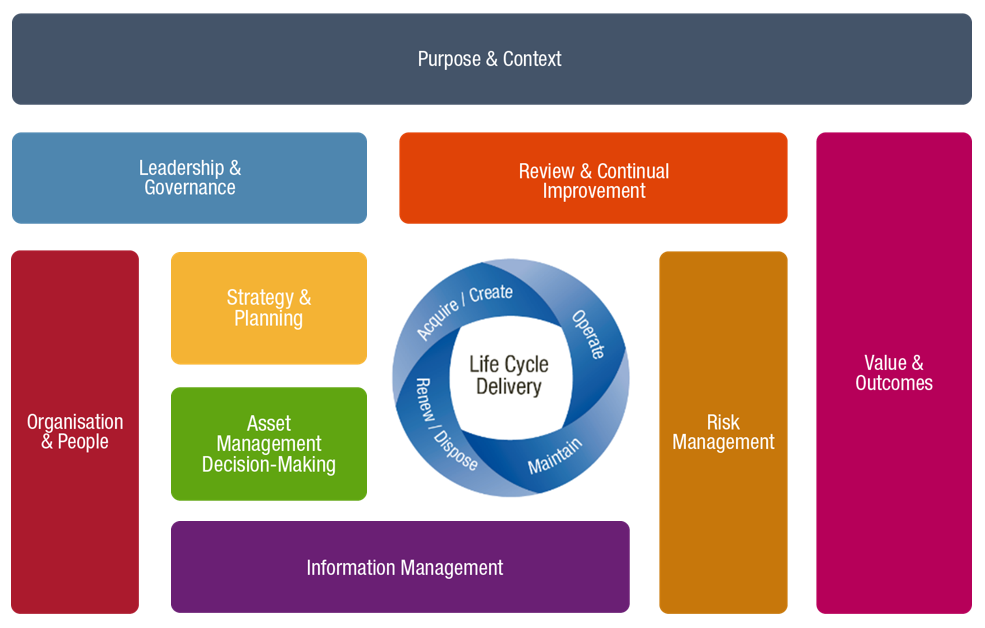
New/Expanded Elements in the 10-Box Model:
- Purpose and Context
A recognition that the organisation’s operating environment influences asset management. This includes legal, regulatory, and market conditions, as well as stakeholders’ needs and expectations. - Leadership & Governance
Emphasises the role of leadership in driving asset management activities, aligning organisational objectives with asset management goals, and ensuring resources are allocated efficiently. - Value and Outcomes
Defined measurable objectives to align asset management efforts with organisational goals, emphasising how these objectives flow from strategy and support long-term success. - Risk Management versus Review & Continual Improvement
Formalizes the need for structured decision-making processes, ensuring that asset-related decisions are made based on robust, data-driven methods, considering lifecycle costs and value generation. - Lifecycle Management
Introduces continuous monitoring and assessment of the asset management system’s performance. It focuses on ongoing improvement, ensuring assets deliver value and risks are mitigated over time.
Comparing the 6-Box and 10-Box Models
Key Additions and Impacts
- Organisational Context and Leadership emphasise how asset management must align with the broader strategic goals of an organisation.
- Decision-Making introduces formal processes, ensuring decisions are based on complete life-cycle analysis.
- Performance Evaluation underscores continuous improvement, promoting ongoing review and adjustment of asset management practices.
The transition to the 10-box model provides a more complete, structured, and standards-compliant framework for managing assets, ensuring better integration of asset management into the organisational context and more effective leadership in asset-related decisions.